Rare Earths &
China's Advantages
China produces ~70% of the world’s rare earths and controls 90% of processing – giving it a powerful bargaining chip on the global stage. Since 2010, Beijing has been accused of weaponizing this monopoly to pressure competitors, rivals, and allies.
The latest flashpoint: in November 2025, China expanded export controls from 7 to 12 rare earth elements, retaliating against U.S. tariff hikes.
What Are Rare Earths?
Comprising 17 elements of the periodic table, the group known as
rare earth elements (REEs) provides significant value to the countries’ national security, energy independence, environmental future, and economic growth.
The name is misleading: rare earth elements aren’t truly rare, but it’s unusual to find them in large, concentrated deposits. And even when they’re found, separating the elements from one another is difficult — a process that is complex, time-consuming, and expensive.
This diagram shows how rare earths are processed.

Why they matter?
REEs are critical to a wide range of industrial and high-tech applications, including electronics, clean energy, aerospace, automotive, and defense. Their unique physical, chemical, magnetic, and luminescent properties enhance efficiency, durability, and performance while enabling the miniaturization of electronic components and alloys.
The largest and most important use of REEs is in the production of permanent magnets, which accounted for 45.2% of global demand in 2023. These magnets are essential for products like cell phones, televisions, computers, automobiles, MRI machines, jet aircraft, and more.
REEs are also vital in clean technology and alternative energy systems, such as wind turbines, fuel cells, rechargeable batteries, and electric vehicles.
Why China dominates?
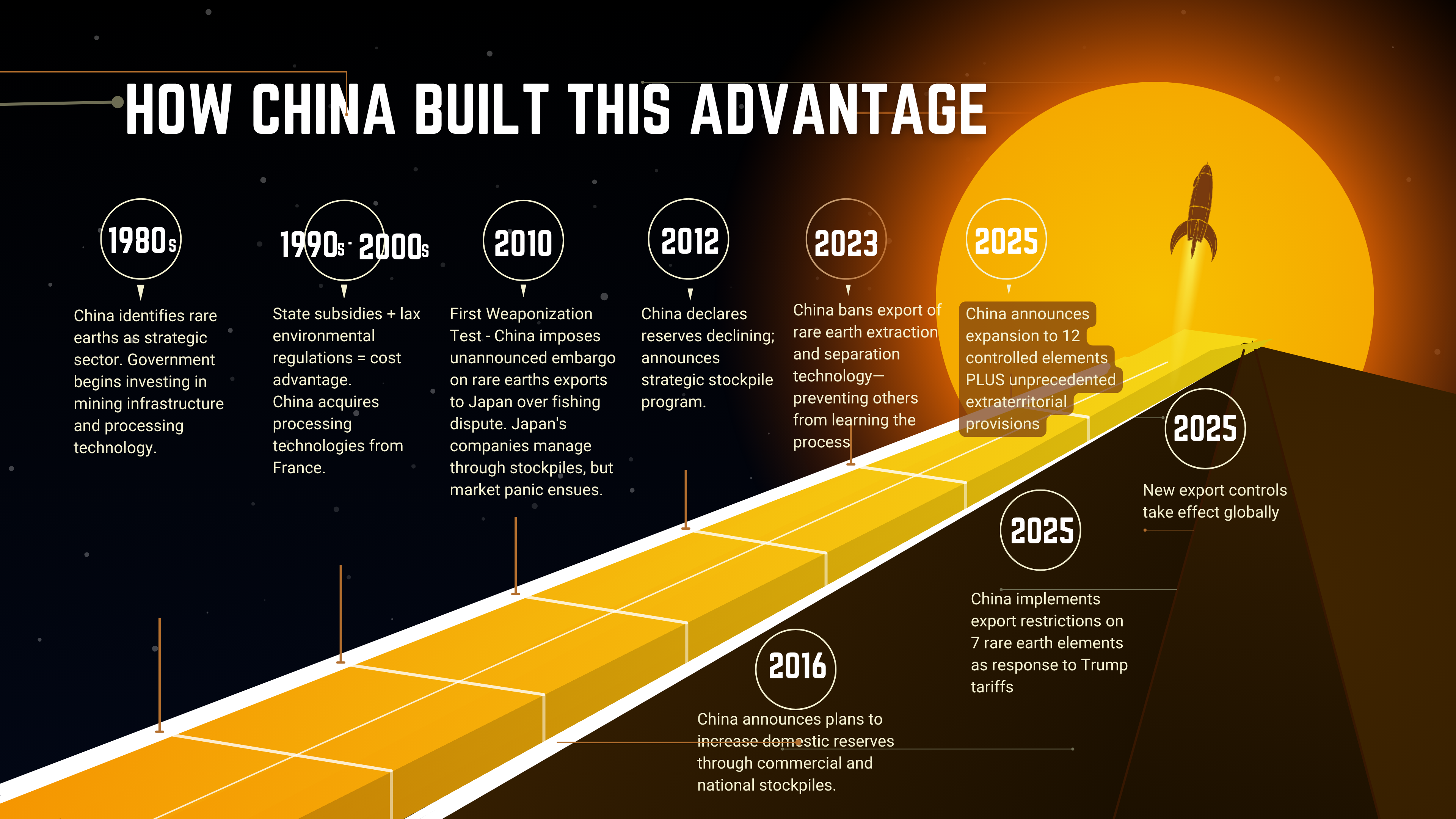
China dominates the rare earth industry because it invested strategically across the entire supply chain – from mining and refining to manufacturing – starting in the 1980s.
 Actually, America was the early leader. Until the 1970s, the Mountain Pass mine in California was the world’s largest supplier of rare earths. At that time, American students and professors were very interested in the unique properties of these materials, leading to breakthrough applications in both commercial and military spheres.
Then American enthusiasm faded, as newer technologies became more enticing.
China was completely different.
Both industry and academia in China were highly focused on rare earths—because there were fewer cool things, and more people. In fact, when the U.S. was still in the lead, nearly 50% of graduate students at the Ames National Laboratory (U.S. Department of Energy) were from China.
Its competitive advantages come from lower costs, large reserves, government subsidies, environmental regulatory flexibility, and technological expertise (over 25,000 patents filed). China absorbs financial losses to keep prices low, which makes it difficult for competitors to sustain new projects. As a result, even though other countries have significant reserves, they depend on China for refined materials.
Decades of targeted policy, investment, and a willingness to undercut rivals cemented China’s position as the world’s rare earth industrial powerhouse
China's Rare Earths Weaponization
China first demonstrated the strategic power of rare earths in 2010 when it halted exports to Japan for two months following a territorial dispute over the Senkaku/Diaoyu Islands, causing global prices to surge tenfold and exposing the world's dangerous dependency on a single supplier.
Since then, China has steadily escalated its use of rare earths as geopolitical leverage: banning extraction and separation technology exports in December 2023, imposing export restrictions on seven rare earth elements in April 2025 in response to U.S. tariffs, and expanding controls in October 2025 to cover twelve elements plus any products containing even trace amounts of Chinese-origin materials.
The new rules include extraterritorial provisions requiring export licenses for foreign-made products using Chinese rare earths or technology, and automatically deny requests for military applications – effectively attempting to block Western defense supply chains.
Global Response
The global response has been substantial but slow. Japan, burned by the 2010 embargo when it depended on China for 90% of its rare earth imports, pioneered diversification by investing in Australia's Lynas Rare Earths and developing recycling programs, reducing its dependency to around 60% today.
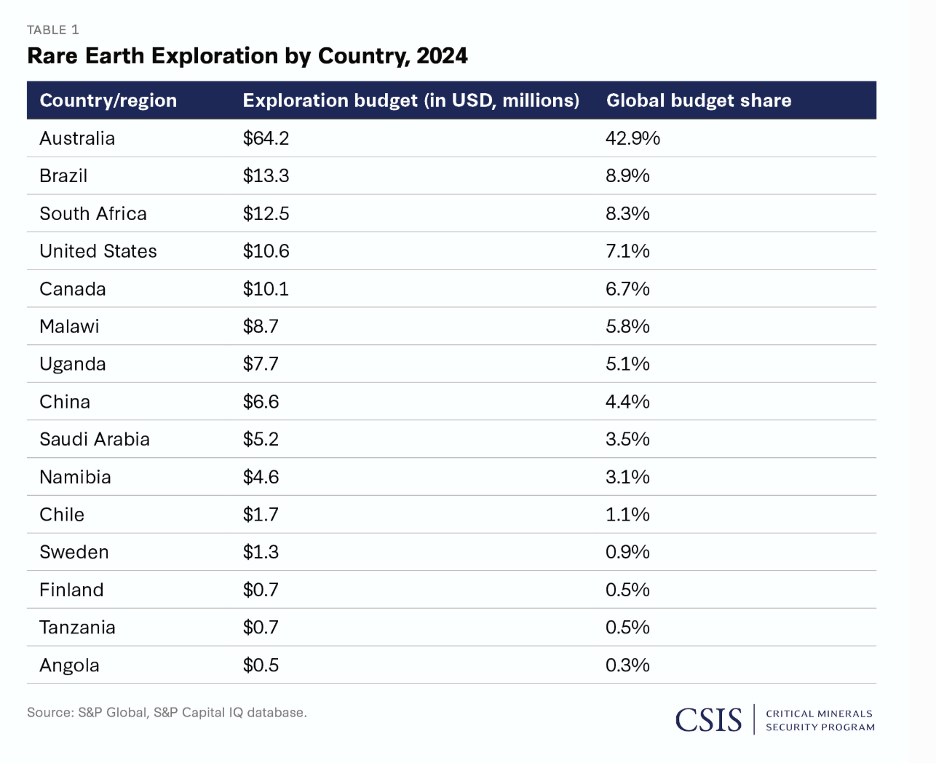 The United States reopened the Mountain Pass mine in California (closed since 2015) and is building domestic processing capacity, though it still imports 70% of rare earths from China.
Europe has launched the Critical Raw Materials Act to promote mining, recycling, and strategic reserves. However, these efforts face major obstacles: new mines take 8-10 years to develop, China undercuts competitors on price through subsidies, and Beijing now restricts the export of processing technology itself—the true chokepoint.
While diversification is underway, analysts estimate China will maintain dominance for at least another 10-15 years, leaving Western nations vulnerable to continued economic coercion.